Metal Roofing on Gulf Coast Beach Houses and Coastal Homes
The short version: Coastal homes face three forces that inland homes do not: salt air, extreme wind, and relentless UV. The right metal roof for a Gulf Coast beach house is standing seam in aluminumAluminumA lightweight, naturally corrosion-resistant metal used for roofing panels, typically in 0.032-inch or 0.040-inch thickness. Does not rust.Costs 1.5-2x more than steel panels. Softer than steel, so more prone to denting from hail. Common for standing-seam roofs on beachfront homes along the Gulf Coast.Why it matters: The best substrate choice within 1,500 feet of saltwater. Aluminum forms a stable oxide layer that resists salt-spray corrosion far better than any steel coating. Weighs about one-third as much as steel.Learn more → (within 1,500 feet of saltwater) or PVDF-coatedPVDF (polyvinylidene fluoride)A resin-based paint system containing 70% PVDF resin (by weight of total resin solids). The highest-performance paint coating available for metal roofing. Kynar 500 and Hylar 5000 are the two licensed PVDF formulations.A true PVDF coating must contain at least 70% PVDF resin. Some manufacturers use 50% blends and market them misleadingly. Always confirm the 70% specification.Why it matters: PVDF coatings resist chalking, fading, and chemical degradation far longer than SMP or acrylic. Expect 30-40 years of color retention in full Gulf Coast sun. This is what separates a premium metal roof from a budget one.Learn more → GalvalumeGalvalumeA steel coating consisting of 55% aluminum, 43.4% zinc, and 1.6% silicon by weight. Developed by Bethlehem Steel in 1972 and now the industry-standard substrate for painted metal roofing.Nearly all premium residential metal roof panels ship on a Galvalume substrate. Unpainted Galvalume should not be used within 1,500 feet of saltwater without a painted finish on top.Why it matters: Galvalume outlasts galvanized steel by 2-4x in atmospheric corrosion tests. The aluminum component provides barrier protection while zinc offers sacrificial (galvanic) protection at cut edges and scratches.Learn more → (farther out), in a light, reflective color that complements the coastal architectural language. The wrong choices — exposed fasteners in the salt zone, SMP coatings, or dark colors without cool pigments — will cost you in maintenance, premature fading, and energy bills.
Why Coastal Homes Need a Different Approach
The Gulf Coast environment is uniquely aggressive. Salt-laden air corrodes exposed metal components. Summer UV exposure rivals the most intense regions in North America. Hurricane-season winds demand engineered attachment systems. And the combination of heat and humidity accelerates every degradation mechanism that affects roofing materials.
A metal roof that performs beautifully 50 miles inland can fail prematurely at the beach if the substrate, fasteners, coating, and attachment method are not specified for the coastal environment. This is not a case where "close enough" works — the difference between a 40-year roof and a 15-year maintenance headache often comes down to two or three specification decisions made at the time of purchase.
Substrate Selection: Aluminum vs Steel at the Coast
Within 1,500 feet of saltwater, aluminum is the clear choice. AluminumAluminumA lightweight, naturally corrosion-resistant metal used for roofing panels, typically in 0.032-inch or 0.040-inch thickness. Does not rust.Costs 1.5-2x more than steel panels. Softer than steel, so more prone to denting from hail. Common for standing-seam roofs on beachfront homes along the Gulf Coast.Why it matters: The best substrate choice within 1,500 feet of saltwater. Aluminum forms a stable oxide layer that resists salt-spray corrosion far better than any steel coating. Weighs about one-third as much as steel.Learn more → naturally forms a stable oxide layer (aluminum oxide, Al2O3) that resists salt-spray corrosion without relying on a sacrificial coating. Even when scratched or cut, aluminum re-passivates — the oxide layer heals itself within hours. No steel coating can match this innate corrosion resistance in concentrated salt environments.
Between 1,500 feet and 1 mile from saltwater, Galvalume steelGalvalumeA steel coating consisting of 55% aluminum, 43.4% zinc, and 1.6% silicon by weight. Developed by Bethlehem Steel in 1972 and now the industry-standard substrate for painted metal roofing.Nearly all premium residential metal roof panels ship on a Galvalume substrate. Unpainted Galvalume should not be used within 1,500 feet of saltwater without a painted finish on top.Why it matters: Galvalume outlasts galvanized steel by 2-4x in atmospheric corrosion tests. The aluminum component provides barrier protection while zinc offers sacrificial (galvanic) protection at cut edges and scratches.Learn more → with a PVDF paintPVDF (polyvinylidene fluoride)A resin-based paint system containing 70% PVDF resin (by weight of total resin solids). The highest-performance paint coating available for metal roofing. Kynar 500 and Hylar 5000 are the two licensed PVDF formulations.A true PVDF coating must contain at least 70% PVDF resin. Some manufacturers use 50% blends and market them misleadingly. Always confirm the 70% specification.Why it matters: PVDF coatings resist chalking, fading, and chemical degradation far longer than SMP or acrylic. Expect 30-40 years of color retention in full Gulf Coast sun. This is what separates a premium metal roof from a budget one.Learn more → system performs well. The PVDF coating protects the Galvalume substrate from salt contact, and the aluminum component of the Galvalume alloy (55% aluminum) provides backup corrosion resistance if the paint is compromised. Standard galvanized steelGalvanized steelSteel coated with a layer of pure zinc via hot-dip galvanizing (typically G90 at 0.90 oz/ft² of zinc). The original corrosion-protection method for steel roofing.G90 is the standard coating weight. G60 (lighter zinc) is cheaper but corrodes faster. In Gulf Coast salt air, galvanized steel without paint will show white rust within a few years.Why it matters: Less corrosion-resistant than Galvalume in most atmospheric exposures. Still used for certain corrugated and 5V-crimp panels, but Galvalume has largely replaced it for painted residential products.Learn more → is not recommended at this distance.
Beyond 1 mile from saltwater, Galvalume steel with PVDF or SMP coating works fine. Salt air concentration drops dramatically with distance, and standard materials perform their full expected lifespan once you are a mile or more from the water.
Panel Profile: Standing Seam Dominates Coastal Architecture
Standing seam is the default for coastal homes, and for good reason. The concealed-fastener design eliminates the single biggest corrosion vulnerability on a metal roof: exposed screw penetrations. Every screw hole in an exposed-fastener panel is a potential failure point where salt air can reach the steel core beneath the coating. Standing seam removes that vulnerability entirely.
Beyond corrosion, standing seam offers superior wind uplift resistance through its concealed clip attachment system. Clips distribute wind forces across the full panel width and allow thermal movement without stressing fastener points. In hurricane-force winds, standing-seam systems routinely outperform exposed-fastener systems by 30-50% in uplift testing. For detailed wind performance data, see our wind performance guide.
The aesthetic match is natural. Standing seam's clean vertical lines complement the open, airy feel of coastal architecture — from traditional raised beach cottages to modern waterfront homes. The seam height creates subtle shadow lines that add dimension without visual clutter.
When Exposed-Fastener Works at the Coast
Not never, but with caveats. 5V-crimp panels have a long history on Gulf Coast coastal structures, particularly older fish camps, beach cottages, and vernacular coastal buildings. If you are restoring or maintaining a historic coastal structure, 5V-crimp in aluminum with stainless-steel fasteners is an appropriate and period-correct choice.
For new construction or reroofing on coastal homes, exposed-fastener panels can work if you use aluminum panels, Type 304 or 316 stainless-steel fasteners, and commit to a 10-15 year fastener inspection and maintenance cycle. The upfront savings versus standing seam are meaningful, but the ongoing maintenance obligation is real.
Color Palette for Coastal Homes
Coastal architecture speaks a light, bright color language. The goal is a roof that feels like it belongs near the water — open, clean, and reflective. Heavy, dark roofs can make coastal homes feel oppressive, especially in the intense Gulf Coast sun.
Top Coastal Colors
Polar White: Maximum solar reflectance, pairs with every siding color. The go-to for raised beach houses, Florida Panhandle cottages, and modern coastal designs. Creates the crispest, brightest curb appeal.
Light Stone / Sandstone: A warmer alternative to white that still reflects well. Pairs beautifully with natural wood siding, Hardie plank in warm tones, and tan or cream stucco. Softens the look without sacrificing much energy performance.
Coastal Blue / Slate Blue: The signature Gulf Coast roof color. Medium blue tones evoke the sky and water, grounding the home in its coastal context. Works especially well with white or light gray siding. Be aware that deeper blues absorb more heat — stick to medium tones for the best balance.
Galvalume Silver: Unpainted GalvalumeGalvalumeA steel coating consisting of 55% aluminum, 43.4% zinc, and 1.6% silicon by weight. Developed by Bethlehem Steel in 1972 and now the industry-standard substrate for painted metal roofing.Nearly all premium residential metal roof panels ship on a Galvalume substrate. Unpainted Galvalume should not be used within 1,500 feet of saltwater without a painted finish on top.Why it matters: Galvalume outlasts galvanized steel by 2-4x in atmospheric corrosion tests. The aluminum component provides barrier protection while zinc offers sacrificial (galvanic) protection at cut edges and scratches.Learn more → or aluminum has a distinctive metallic silver appearance that reads as nautical and functional. Popular on contemporary beach houses and boat houses. Note that unpainted Galvalume should be painted or used in aluminum form if within 1,500 feet of saltwater.
Weathered Bronze: A warm metallic tone that suggests aged copper without the copper price tag. Works on upscale coastal homes, especially those with natural stone, wood shingle siding, or coastal-traditional detailing.
Colors That Struggle on Coastal Homes
Dark greens and forest greens can make coastal homes feel heavy and landlocked. Save these for wooded inland properties.
Barn red and rustic reds read as farmhouse or agricultural — a style mismatch with most coastal architecture.
Matte black works on modern coastal homes with the right design language, but it absorbs maximum heat and can overwhelm smaller beach cottages.
A white roof on a beach house will cause blinding glare for neighbors.
Reality: Modern white metal roof coatings are formulated with matte or low-gloss finishes that diffuse reflected light rather than creating specular (mirror-like) reflection. A white PVDF-coated metal roof is no more glare-producing than a white asphalt shingle roof. The old problem of bare, polished metal causing glare is largely eliminated by paint coatings. Some municipalities and HOAs still have legacy anti-glare ordinances, so check local rules, but the technical concern is outdated.
Architectural Sub-Styles Along the Gulf Coast
Traditional Raised Beach Cottage
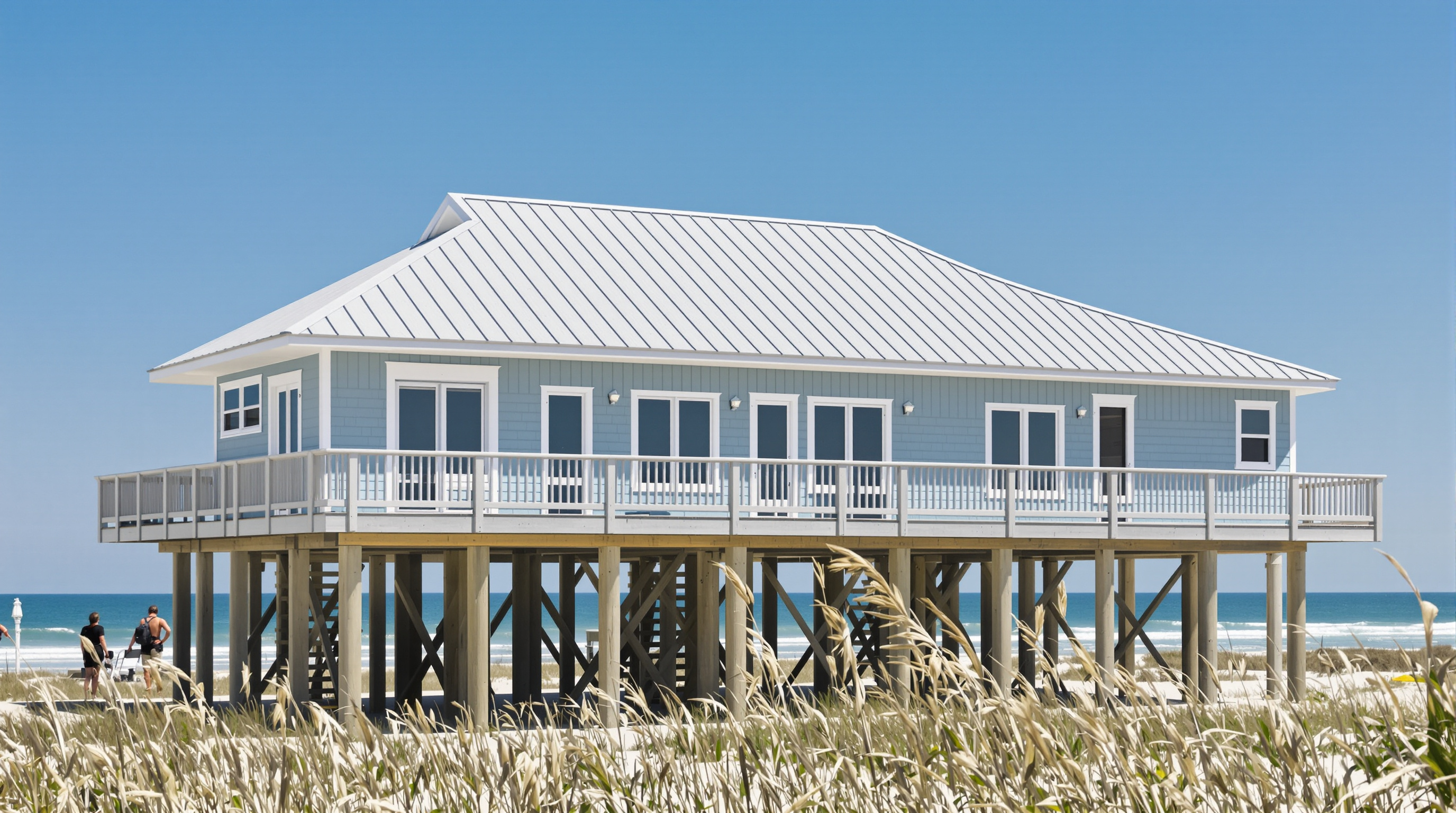
Characteristics: Elevated on pilings, covered porches, hip or gable roof with moderate pitch, lap siding or shingle siding, typically painted in pastel or white.
Roof recommendation: 5V-crimp aluminum (historically authentic) or standing seam aluminum in Polar White, Light Stone, or Coastal Blue. Keep the roof light and understated — these homes are about the porch and the view, not the roof.
Modern Coastal
Characteristics: Clean lines, large windows, flat or low-slope sections mixed with standing-seam shed roofs, neutral exterior palette (whites, grays, natural wood accents).
Roof recommendation: Standing seam in Charcoal, Zinc Gray, or Matte Black for bold contrast against white walls, or Galvalume Silver for a sleek, industrial-coastal aesthetic. The roof is a strong design element on modern coastal homes — choose a color that makes a statement.
Gulf Coast Colonial / Southern Traditional
Characteristics: Brick or stucco lower level, symmetrical facade, columned portico, medium-to-steep roof pitch, traditional window proportions.
Roof recommendation: Standing seam in Weathered Bronze, Dark Bronze, or Burnished Slate. These homes need a roof color with substance — too light and the roof looks like an afterthought. The darker earth tones give the roof enough visual weight to anchor the formal composition.
Key West / Florida Vernacular
Characteristics: Compact footprint, steep roof pitch, bright paint colors, louvered shutters, gingerbread trim, close-set to neighboring homes.
Roof recommendation: Standing seam or 5V-crimp in Galvalume Silver, Polar White, or a color that contrasts with the bold wall color. Key West-style homes use color as personality — a turquoise house with a bright silver roof, a coral house with a white roof. The roof plays supporting role to the exuberant wall color.
A homeowner is building a new raised beach cottage 800 feet from the Gulf in Destin, Florida. What substrate and panel type should they use?
Wind Performance on Coastal Homes
Gulf Coast coastal homes face the highest wind loads in the continental United States. Hurricane-force winds regularly exceed 100 mph, and peak gusts above 150 mph are not uncommon in direct hurricane landfalls. Your metal roof must be engineered for these loads, not just rated for them.
Standing seam with engineered clip spacing is the highest-performing option. By adjusting clip spacing — closer together at eaves, edges, and corners — installers can tune the uplift resistance for specific wind zones. A well-engineered standing-seam roof can achieve 60-90+ psf uplift resistance, which translates to survival in 150+ mph winds.
Florida Building Code requirements are among the strictest in the nation for coastal wind zones. If you are building or reroofing in a Florida High-Velocity Hurricane Zone (HVHZ), your metal roof system must have a Florida Product Approval (FPA) or Miami-Dade Notice of Acceptance (NOA) for the specific panel, clip, and attachment configuration. Ask your contractor for the specific approval numbers — do not accept "it meets code" without documentation.
For a thorough analysis of metal roof wind performance, including clip spacing tables, edge and corner zone requirements, and real hurricane performance data, see our wind performance guide.
Maintenance Considerations for Coastal Metal Roofs
Coastal metal roofs need more attention than inland roofs, even with the right materials. Salt deposits accumulate on the roof surface and, left unwashed, can accelerate coating degradation and promote corrosion at any minor coating damage. Annual fresh-water rinsing — using a garden hose, not a pressure washer — removes salt deposits and extends coating life.
Inspect annually after hurricane season. Check for lifted seams, damaged flashing, debris impacts, and any coating scratches that could become corrosion entry points. Touch up any bare metal immediately with a cold-galvanizing compound or manufacturer-approved touch-up paint.
Gutter and flashing inspection is especially important at the coast. Salt air corrodes dissimilar metals at contact points (galvanic corrosion), so ensure all flashing, fasteners, and gutter attachments are the same metal family as the roof panels or separated with dielectric barriers.
Frequently Asked Questions
What is the best metal roof for a beach house on the Gulf Coast?
Standing-seam metal roofing in aluminumAluminumA lightweight, naturally corrosion-resistant metal used for roofing panels, typically in 0.032-inch or 0.040-inch thickness. Does not rust.Costs 1.5-2x more than steel panels. Softer than steel, so more prone to denting from hail. Common for standing-seam roofs on beachfront homes along the Gulf Coast.Why it matters: The best substrate choice within 1,500 feet of saltwater. Aluminum forms a stable oxide layer that resists salt-spray corrosion far better than any steel coating. Weighs about one-third as much as steel.Learn more → substrate is the best option for beach houses within 1,500 feet of saltwater. For homes beyond 1,500 feet, GalvalumeGalvalumeA steel coating consisting of 55% aluminum, 43.4% zinc, and 1.6% silicon by weight. Developed by Bethlehem Steel in 1972 and now the industry-standard substrate for painted metal roofing.Nearly all premium residential metal roof panels ship on a Galvalume substrate. Unpainted Galvalume should not be used within 1,500 feet of saltwater without a painted finish on top.Why it matters: Galvalume outlasts galvanized steel by 2-4x in atmospheric corrosion tests. The aluminum component provides barrier protection while zinc offers sacrificial (galvanic) protection at cut edges and scratches.Learn more → steel with a PVDF coatingPVDF (polyvinylidene fluoride)A resin-based paint system containing 70% PVDF resin (by weight of total resin solids). The highest-performance paint coating available for metal roofing. Kynar 500 and Hylar 5000 are the two licensed PVDF formulations.A true PVDF coating must contain at least 70% PVDF resin. Some manufacturers use 50% blends and market them misleadingly. Always confirm the 70% specification.Why it matters: PVDF coatings resist chalking, fading, and chemical degradation far longer than SMP or acrylic. Expect 30-40 years of color retention in full Gulf Coast sun. This is what separates a premium metal roof from a budget one.Learn more → is an excellent and more affordable option. Popular colors include Polar White, Light Stone, Coastal Blue, and Weathered Bronze.
What color metal roof looks best on a coastal home?
Light, airy colors dominate coastal architecture. Polar White, Light Stone, Coastal Blue, Galvalume Silver, and Weathered Bronze are the most popular choices. These colors reflect solar heat effectively and complement the bright, open feel of coastal design.
Does a metal roof hold up in hurricane-force winds?
Standing-seam metal roofs are among the best-performing systems in hurricanes. Properly installed standing-seam panels with engineered clip spacing can withstand 150+ mph wind speeds. The concealed clip attachment distributes wind uplift forces across the panel width, giving standing seam a significant advantage over exposed-fastener systems in extreme wind.